
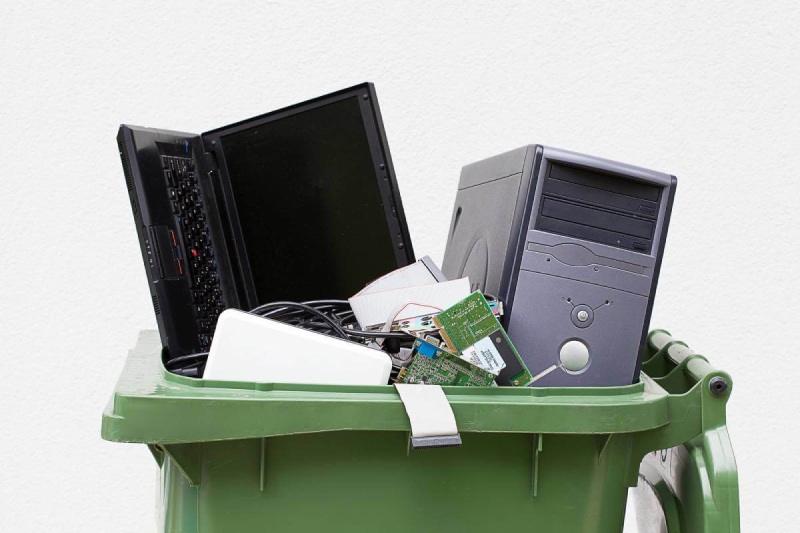
Quick Answer: When small business owners discard broken equipment without updating their fixed asset listing, they create “ghost assets.” These paper-only items cause businesses to continuously overpay on local property taxes and miss out on lump-sum federal income tax deductions.
Key Takeaways
- A ghost asset is any piece of business equipment that has been thrown away, sold, or broken but still officially exists on your accounting books and depreciation schedule.
- Overpaying local taxes happens when you leave discarded equipment on your fixed asset listing, as county assessors will continue to levy annual business personal property taxes on those items.
- An immediate income tax deduction is triggered when you properly report an asset disposal, allowing you to claim a lump-sum “Loss on Disposal” on IRS Form 4797.
- Retroactive tax relief is possible for equipment thrown away years ago by either amending a prior-year tax return or filing IRS Form 3115 to secure a catch-up deduction.
Don’t panic, but… your business could be haunted.
By the ghosts of broken laptops or defunct machinery you’ve long since thrown away.
Because your books don’t automatically know when an item hits the trash, that dead equipment stays alive on paper.
And it grinds away on a multi-year depreciation schedule, silently leaking your profits.
Here’s how we can work together to clean up your books and claim your rightful dumpster deductions, ghost-busters style.
What is a ghost asset in business accounting?
A ghost asset is an item that remains listed on your fixed asset schedule and accounting books, but isn’t physically present or usable within the business anymore.
When you buy a major piece of equipment, there’s a bank transaction, an invoice, or a loan document. Your accounting software flags that transaction and we log it onto your depreciation schedule so you can write it off over time.
But when that equipment breaks and you throw it in the dumpster, your accounting software has no way of knowing the asset is gone.
Unless you explicitly tell me, “Hey, we threw that equipment away,” I’ll assume it’s still a working member of your team.
And so, that piece of trash keeps depreciating year after year, causing you to overpay on local property taxes and miss out on an income tax write-off.
What happens to depreciation when you dispose of an asset?
When you dispose of a business asset, its regular depreciation schedule stops immediately, and any remaining undepreciated value is typically claimed as an instant tax deduction in the year of disposal.
Instead of slowly stretching the write-off over several more years, the IRS allows you to accelerate the remaining balance and wipe it off your books all at once.
To understand how this works, you have to calculate your asset’s adjusted basis:
Adjusted Basis Tax = Original Historical Cost – Accumulated Depreciation
When you throw an item in the dumpster, you are disposing of it for a sale price of $0. Because you got nothing for it, the tax code treats this as a financial loss.
Here is exactly how the IRS handles the math when you report the disposal:
- The asset is officially taken off your active depreciation schedule. It will no longer generate small, incremental annual deductions.
- If you bought a piece of equipment for $10,000, and you’ve only taken $4,000 in depreciation so far, it has a remaining “book value” of $6,000.
- When you report that you threw it away, that remaining $6,000 becomes an immediate Loss on Disposal of Business Property.
This entire transaction is reported on IRS Form 4797. The resulting ordinary loss goes directly onto your tax return to reduce your business’s overall taxable income for that year.
How does equipment depreciation work if you forget to report the disposal?
If you throw an asset away but fail to report the disposal to your CPA, the old depreciation schedule keeps grinding along in the background. While you might think, “Well, at least I’m still getting my small annual depreciation deduction,” you’re actually losing money.
First, you lose the time-value of money by missing out on a massive, lump-sum deduction today that could significantly lower your current tax bill. Second, as long as that asset remains active on your books, you will continue to pay local business personal property taxes on an item that is currently sitting in a county landfill.
How to clean up your fixed asset listing
To clean up your fixed asset listing, you need to do a physical inventory of your business equipment and compare it against our official depreciation schedule to find and remove any ghost assets. That way, your balance sheet is accurate, you stop local property tax overpayments, and you unlock missed income tax deductions.
Step 1: Request your current depreciation schedule
We’ll need to pull a copy of your full Fixed Asset Report or Depreciation Schedule. It details every piece of equipment, vehicle, or technology your business has ever capitalized, along with its purchase date and current book value.
Step 2: Conduct a physical asset audit
Take that printout or spreadsheet and walk the (physical or digital) floor of your business. Look at every item on the list and verify its real-world status.
- Is that 2018 delivery van still in the parking lot?
- Are those laptops from five years ago still being used by your team, or were they recycled?
- Is that broken piece of manufacturing gear still in your warehouse, or did it go to a scrap yard?
Step 3: Flag the ghosts
As you go through the list, highlight any asset you don’t have anymore. Note how it left (was it sold, traded in, scrapped, stolen, or thrown away?) and, as accurately as possible, when it left. Even a rough estimate of the year and month helps me calculate the correct adjustment.
Step 4: Submit your findings
Hand your marked-up list back to me. I’ll remove the ghost assets from your active schedule, stop future property tax calculations on those items, and file IRS Form 4797 to claim any immediate, lump-sum deductions you’re owed for their disposal.
Step 5: Make it a habit
Make a fixed asset cleanup a permanent part of your tax planning routine. Spending just 30 minutes reviewing this list every year means you won’t be writing property tax checks for equipment that’s sitting in a landfill.
How does equipment depreciation work if I threw something away years ago?
If you threw a business asset away years ago but left it on your books, you can’t just claim it as a standard disposal on your current-year tax return. We have to take one of two paths:
Path 1: If you threw the item away recently (typically within the last three years), we can look back and amend that specific year’s tax return. This unlocks the missed deduction by retroactively lowering your taxable income for that year, which often triggers a tax refund check from the IRS.
Path 2: If amending the old returns isn’t an option (or if the asset has been sitting as a ghost on your books for a long time) we can file Form 3115. This allows us to calculate all the deductions you should have taken when the item was discarded and claim them as a lump-sum catch-up adjustment on your current tax return.
What if I used Section 179 or Bonus Depreciation to write off 100% of my equipment?
If you used Section 179 or Bonus Depreciation to write off 100% of your equipment when you bought it, disposing of it won’t generate a current-year income tax deduction. But you still have to remove it from your books to stop paying ongoing local business personal property taxes.
Here’s why: When you use accelerated depreciation methods like Section 179 or Bonus Depreciation, you reduce the asset’s adjusted basis (its remaining tax value) down to $0 in the very first year.
Because the tax value is already zero, tossing it into a dumpster means you’re losing an asset worth $0 on paper. There’s no leftover financial loss to claim on your current income tax return.
But leaving these fully deducted ghost assets on your books is still a financial no-no for two reasons:
- Your local county tax assessor calculates your annual Business Personal Property Tax based on the original historical cost of the equipment. If a fully depreciated $20,000 piece of machinery stays on your fixed asset list as a ghost, your county will continue to send you a property tax bill for it.
- Keeping dead assets on your books artificially inflates your company’s total asset value. If you ever apply for a business loan, line of credit, or try to sell your business, an inaccurate fixed asset listing can distort your financial ratios and raise red flags during a bank’s or buyer’s due diligence.
Final thoughts
Don’t let the ghosts of broken gear and old technology erode your hard-earned profits. Let’s cross-reference your physical inventory with your official depreciation schedule together so you stop overpaying local taxes and claim any missed deductions.
waterbury-cpa.com/make-an-appointment/
FAQs
“What’s the difference between a ghost asset and a regular asset?”
A ghost asset only exists on paper within your accounting records, whereas a regular asset is physically present and currently functioning inside your business. Regular assets are actively helping your business generate revenue, while ghost assets are items that have been broken, sold, or thrown into a dumpster but were never properly removed from your financial balance sheet.
“Do I still pay property tax on equipment my business no longer uses?”
You’ll continue to pay local business personal property tax on equipment you no longer use as long as those items are listed on your active fixed asset schedule. Local county tax assessors rely entirely on your historical accounting records to calculate your annual tax bill; if you don’t explicitly notify them through your CPA that an asset has been discarded, they assume it’s still active and tax you accordingly.
“Can I claim a tax write-off for throwing away fully depreciated equipment?”
No, throwing away fully depreciated equipment will not trigger a federal income tax deduction because the asset’s remaining book value has already been written down to zero. However, removing a fully depreciated asset from your books is still crucial because it’s the only way to stop your local county from charging you ongoing annual business property taxes on that item.
“How do I remove a broken asset from my accounting software?”
To remove a broken asset from your accounting software, you must record an asset retirement or disposal journal entry that zeroes out both the asset’s original cost and its accumulated depreciation. Simply deleting the item from your software can distort your past financials, so the proper procedure is to mark it as “disposed” and provide the exact disposal date to your CPA.
“How does equipment depreciation work if I sell a piece of business equipment?”
If you sell a piece of business equipment for more than its remaining book value, you must report the sale on IRS Form 4797 and pay “depreciation recapture” taxes on the profit. The IRS treats the gain on that sale as ordinary income up to the amount of depreciation you previously claimed on the item, rather than treating it as a favorable capital gain.